

Canada Is Now In The Hands Of Arch-Technocrat And Trilateral Mark Carney
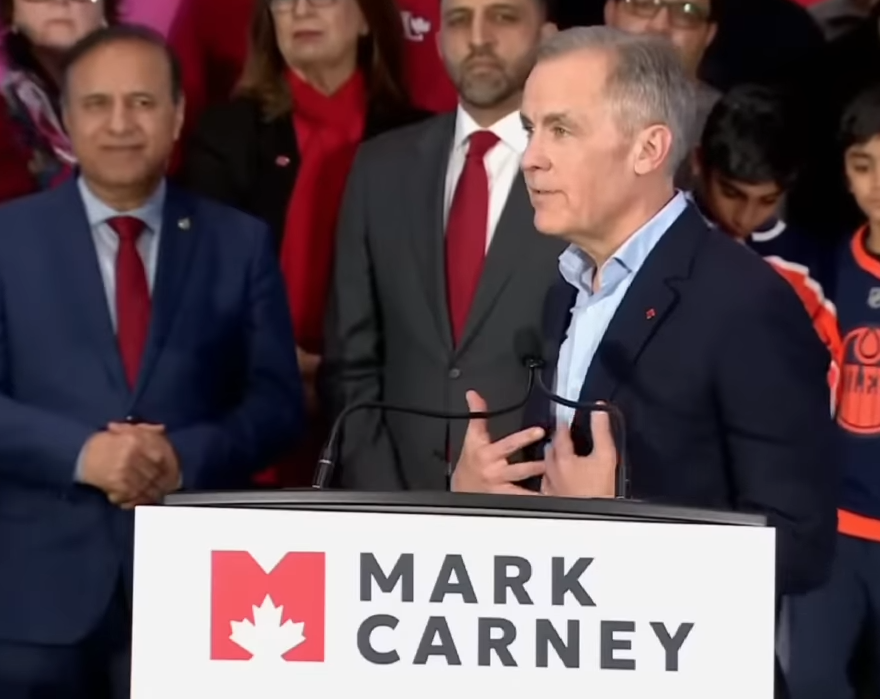
Justin Trudeau appears as a pedestrian slacker in the shadow of a heavyweight globalist like Mark Carney: former governor of the Central Bank in Canada (2008 -2013), former governor of the Bank of England (2013-2020) former member of the Trilateral Commission, former Goldman Sachs managing director, and bigwig with Bilderberg, WEF, United Nations, etc.
Carney has been labeled a Technocrat along with other Trilaterals like Mario Monte (Italy) and Georges Papademos (Greece), and Keir Starmer (UK).
Perplexity concludes,
Mark Carney’s affiliation with the Trilateral Commission underscores his role as a linchpin between global finance and governance. While his contributions to financial stability and climate policy are substantial, they are inextricable from the elite networks that shape his worldview. As Canada navigates shifting geopolitical and economic currents, Carney’s dual identity—as both a pragmatic technocrat and a symbol of transnational elitism—will remain contentious. Future research should explore how such networks influence domestic policy amid rising nationalist sentiment and economic fragmentation. ⁃ Patrick Wood, Editor.
The Justin Trudeau era is coming to a close in Canada, with the governing Liberal Party selecting former central banker Mark Carney as its new leader and eventual prime minister on Sunday.
The leadership contest sparked by Prime Minister Trudeau’s resignation in January came to a close on Sunday evening, with former Bank of Canada governor Mark Carney winning the internal party election. Having won 85.9 per cent of the vote, Carney bested former finance minister and deputy PM Chrystia Freeland at 8 per cent, former cabinet minister Karina Gould at 3.2 per cent, and businessman and former MP Frank Baylis at 3 per cent, CBC reports.
Perhaps demonstrating a lack of enthusiasm, of the approximate 400,000 Liberal Party members who registered to vote in the leadership contest, CTV reports that just 151,899 votes were actually cast.
Under Canada’s parliamentary system, Carney does not automatically become prime minister but will have to wait for Trudeau to officially tender his resignation to the governor-general. After that, Carney will be invited to form a new government. This process is expected to be carried out within the next week.
Despite being a longtime advisor to Trudeau, including on economics and during the coronavirus lockdowns, Carney has attempted to cast himself as an outsider who can take the Liberal Party in a new direction and be a firm hand in the ongoing trade dispute with the United States and President Donald Trump.
However, critics, such as Conservative Party leader Pierre Poilievre, have accused the former Goldman Sachs investment banker of being “sneaky” and of representing a doubling down of the failed economic and environmentalist Trudeau-era agendas.
While never elected to public office, likely the first prime minister to have never been voted for at any level, Carney has been deeply involved in politics in Canada and internationally for nearly two decades. He was first installed as the head of the Bank of Canada during the 2008 financial crisis.
Carney later became the first non-British person to be selected to lead the Bank of England in 2013. During his tenure as governor of the UK’s central bank, Carney frequently faced criticism for spreading “project fear” warnings of a potential financial crisis due to the Brexit withdrawal from the European Union.
During the Chinese coronavirus crisis, Carney served as an advisor to Boris Johnson’s government in Britain and later to Justin Trudeau’s government in Canada, both of which instituted some of the strictest lockdown restrictions in the Western world.
Read More: Canada Is Now In The Hands Of Arch-Technocrat And Trilateral Mark Carney


Advertising by Adpathway