


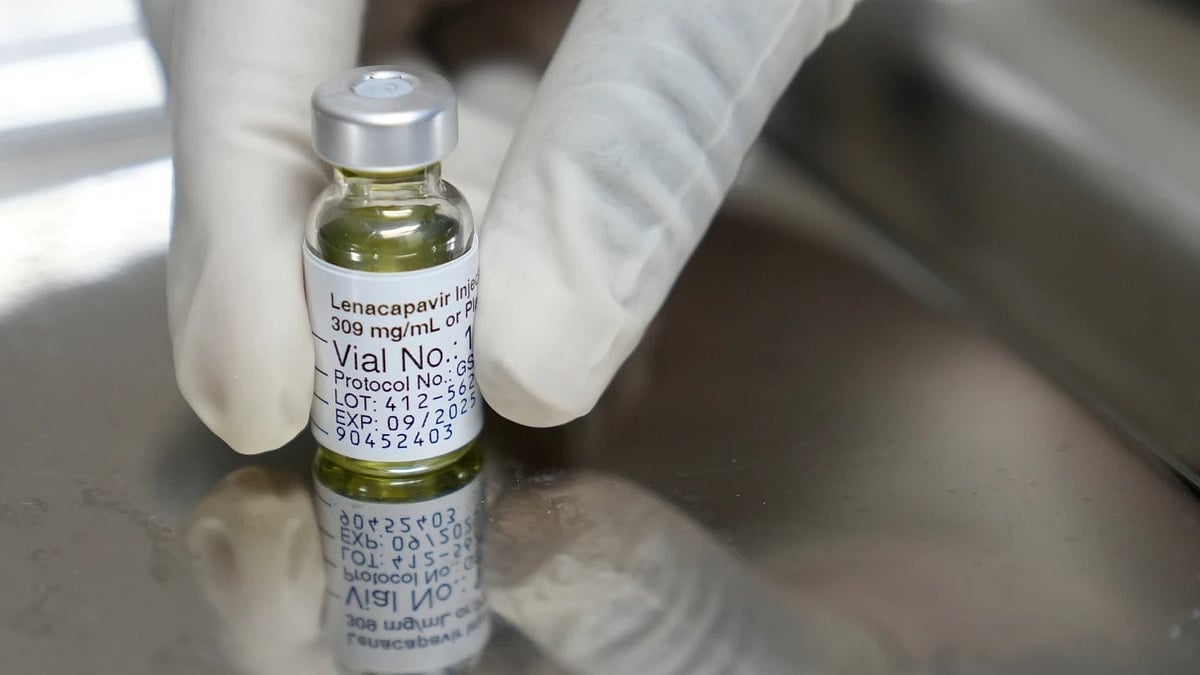
Yearly HIV prevention injection 'Lenacapavir' shows promise in clinical trial
NEW DELHI: A yearly injection to protect against HIV is safe and shows promise as a prevention method with long-lasting effects, according to the results of a clinical trial published in The Lancet journal.
'Lenacapavir' was developed by Gilead Sciences, a research-based biopharmaceutical company in the US, as a pre-exposure prophylaxis (PrEP) medication to prevent infection in people at risk of exposure to HIV.
It is administered as an injection into the muscle tissue.
The drug, which works by blocking HIV from entering and multiplying in human cells, remained in the body for at least 56 weeks, according to the phase 1 randomised controlled trial.
Phase 1 trials assess how a new drug is absorbed and metabolised in a group of 20-100 healthy volunteers, along with its safety.
HIV, or human immunodeficiency virus, attacks and weakens a person's immune system by targeting white blood cells.
Acquired immunodeficiency syndrome (AIDS) is caused at the most advanced stage of HIV infection. Currently, there is no cure or vaccine approved for HIV/AIDS.
The trial included 40 participants, aged 18-55 years, who did not have HIV.
Two formulations of the drug were prepared- one with 5 per cent ethanol and the other with 10 per cent. Half of the participants received the first formulation of lenacapavir, while the other half received the second. The drug was administered as a single 5000 milligram dose.
Samples collected from the participants for up to 56 weeks were analysed to assess safety and drug behaviour.

Advertising by Adpathway